
|
||||||||||||||||||||||
|
 Do You Dread Changing Your Active Toddler's Diaper?
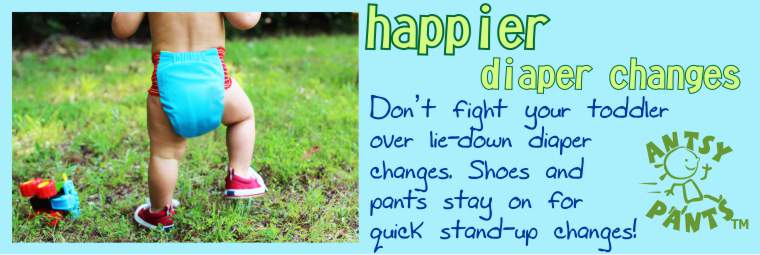
 For Guaranteed Happier Diaper Changes, Put Your Child In Toddler Diapers
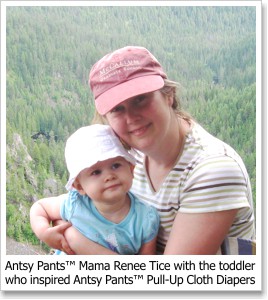 Since my dream toddler diaper was nowhere to be found, I designed it myself. Did I mention my
background is in Apparel Design?
Since my dream toddler diaper was nowhere to be found, I designed it myself. Did I mention my
background is in Apparel Design?
 |
...contain messes like any diaper should (but not all manage). |
|
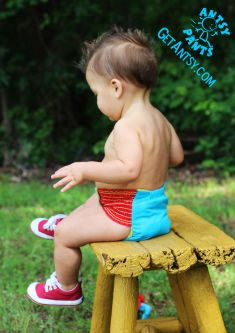
...go on and off easily, whether over the feet or with sides open. |
|
...are super cute, in fun, vibrant colors. |
|
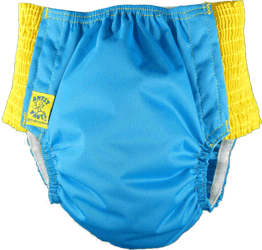
...make potty trips and changes easy, with easy-stretch sides. |
|
...teach potty skills essential to potty independence, for easier potty training success. |
|
...have the only risk-free money-back cloth diaper guarantee. Right here on GetAntsy.com! |
And of course all of the other benefits that are inherent to cloth diapering. Better for your child and better for the environment.
In case you're wondering how Antsy Pants™ helps teach potty skills, it's a little something I like to call Wetting Feedback™. So just what is Wetting Feedback™? It's the immediate wet feeling that helped our mothers and grandmothers potty train their children early using cotton diapers, coupled with a transition to a drier feel through the use of wicking fabrics and super fast absorbing "guts" inside the diaper.
Antsy Pants™ were developed to feel wet before they return to a dry feel on the surface.Wetness is spread quickly across and through the lining fabric, where it is pulled into the moisture-loving absorbent layers.That means that your child will know when they wet, every time they wet. You don't have to change wet diapers immediately, and you don't have to strip them naked to let them know when they are wetting. You also don't have to risk rashes. Antsy Pants™ are made from top-quality fabrics with natural antibacterial properties built in.
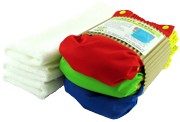
Here's what you can expect to receive when you place your order:
 |
Your own stash of reusable Antsy Pants™ Pull-Up Diapers in fun toddler colors. Customize your order based on how many diapers your child uses per day and how often you will be laundering them. |
|
Boosters for nap-time and night-time diapering depending on your needs. |
|
Full printed instructions for the diapers' use and care. |
|
Our support during the whole time you are using the diapers, including our online FAQs and customer service by email or phone. |
|
Our full product guarantee. We stand behind the quality of our diapers one hundred percent. That's even if you've already washed them, and even if your child has already worn them. |

Stop fighting with your child over lay-down diaper changes, and stop putting off potty trips because it's too much hassle.
Place your Antsy Pants™ order today and start laying the groundwork for successful potty training.
Don't you owe it to your child to take this step? It's simple to get your own stash of the best pull-up cloth diapers on the market. Just make sure you have your PayPal or credit card information on hand, click on the appropriate link below and follow the instructions on the order page. Your Antsy Pants ™ will be on their way to you soon.
Buy Antsy Pants™ or Lease Antsy Pants™
Take a positive step for your child, your family and your environment right now. You'll be so glad you did.
Place your Antsy Pants™ order today and start laying the groundwork for successful potty training. Don't delay; these popular toddler diapers are selling as fast as we can make them!
To happier toddler diapering and easier potty training,
Renee J. Tice
Fly Baby, LLC
Makers of Antsy Pants™ Pull-Up Cloth Diapers
P.S.- If you still have questions about Antsy Pants™ Pull-Up Cloth Diapers, check our product detail page and online FAQs for answers.
What People Are Saying About Antsy Pants™
|
"I got the intro pack last week and loved it so much that I'm ordering some more. Thanks!" |
"Thanks for the antsy pants, my daughter loves them. I'm not battling with my 14 month old to put diapers on anymore. It's great!" |
"This has absolutely solved my nighttime heavy wetter issue...the Antsy Pants™ system is the only one that makes it consistently through the night – thank you!" |
| Jenifer Mom to a 5yr old |
Elissa Mommy to a 14 month-old girl |
Kristy |



|
Antsy Pants™ Pull-Up Cloth Diapers, Optimized For Potty Training
Copyright 2009- all rights reserved.
www.GetAntsy.com